
What are your most daunting and horrifying marketing fears? Have you confronted them, or are they still lurking in the dark corners of your marketing mind? The uncertainty of the pandemic has given rise to new fears for many, and brought out long-recessed ones for others. Luckily with all of these fears come new opportunities for tackling them, learning more about ourselves, and perhaps even becoming better marketers in the process. Let’s take a look at some of the top fears in marketing, including examples from some of our own team, and explore how you can take action to conquer your greatest marketing fears and turn them into 2021 successes.
1 — Fear of Boring and Losing Your Audience
via GIPHY A top fear shared by many marketers is undoubtedly creating content that does nothing but bore your audience. Especially among B2B marketers, the fear of producing dull and dry content is a valid concern, where many worry about how to bring life and energy to the latest whitepaper data or statistics. Thankfully, the B2B marketing industry has undergone a significant sea change in recent times, as methods for infusing interactive and experiential elements, genuinely interesting storytelling, and the trustworthiness of expert industry influencers have proliferated — all methods you can incorporate into your own efforts to ditch the legacy of dusty old boring B2B. Over the years we’ve written many articles about how B2B marketers can bring energy, inspiration, and genuine excitement to digital efforts, and here are just a few to help you overcome the fear of creating boring B2B content:- 6 Ways to Bring More Boom! & Less Boring to Your B2B
- How to Hit a Marketing Home Run with Experiential Content
- Bye-Bye Boring B2B: Lee Odden Shows B2BMX Attendees the Power of Interactive Influencer Content
- Break Free of Boring B2B with Interactive Influencer Content
- What B2B Marketers Need to Know About Experiential Content
- Infographic: 5 Must Have Ingredients for a Great Content Marketing Strategy
2 — Fear of Not Doing Enough & Being Unmotivated
As Tim Herrera, smarter living editor at The New York Times recently wrote in the piece “7 Months Into the Pandemic and I’m Losing Motivation. Help!”, now isn’t the time to pretend we’re living in normal times. “Accepting that it’s OK to not feel as inspired as you did a year ago can help us adjust to this new way of life,” Herrera suggested. Anxiety and stress can take a huge toll on productivity, so it’s important for marketers to reassess — daily or even hourly — just what progress and personal success are during a lengthy pandemic, and to define them in more forgiving and graceful ways during the pandemic. During the pandemic some 23 percent of people across the world have turned to online communities for stress management, according to Facebook's recently-released "Connected Convenience: How People Are Finding And Fostering Togetherness Online" report, which for marketers has given rise to newfound digital connection opportunities to reach audiences. The fear of facing lost motivation and the decreased productivity that often follows is a significant challenge, however there are ways to start turning the table on them. We should remind ourselves that we're in the midst of a pandemic, and that simply making it through a day can in its own way be the biggest victory we can hope for. It can also be helpful to take stock of anything extra beyond the bare minimum that we've been able to accomplish during the day — even if it's just one small task — to remind ourselves that we not only have the power to push on and survive the daily challenges of the global health crisis, but also the ability to perform in ways that may surprise us if we take the time to seek out and acknowledge them. B2B marketers are a busy bunch, and while having a chock full or overbooked schedule can in some ways help us make it through the next day, it's important to take care of our own needs — whether by boosting happiness hormones or through other methods — and to work in time for reflection, physical and creative activities, and other self-care elements that will help avoid marketing burnout as time passes. [bctt tweet="“It’s important to take care of our own needs and work in time for reflection, physical and creative activities, and other self-care elements to help avoid marketing burnout as time passes.” — Lane R. Ellis @lanerellis" username="toprank"]3 — Fear of Uncertainty
via GIPHY During the pandemic the fear of uncertainty has affected us all. Most marketers are still dealing with the upheaval of remote work, and the uncertainty surrounding a future that remains more of a mystery than anyone would like can at times feel overwhelming. This fear of uncertainty has played a part in a significant drop in confidence among corporate executives, according to Deloitte's new Global Marketing Trends 2021 report, surveying over 400 global CMOs and other executives. From CEOs and CIOs to COOs and CMOs, confidence has understandably fallen during the pandemic. Marketing activities that boost trust can help overcome the confidence debt that has risen during the pandemic, such as those our CEO Lee Odden recently explored in "In Search of Trust: How Authentic Content Drives Customer Experience." To help face some of the fears surrounding remote work, we’ve also written several articles to assist you in turning those remote work challenges into newfound advantages, including my own “Day 4,777: Remote Work Tips From 13+ Years As A Distance Marketer.” Here are the others:
- 5 Project Management Tips for Adrift Remote Marketing Teams
- 6 Tips to Keep B2B Marketing Teams in Rhythm While Working Remotely
- New Research: How B2B Content Marketers Are Impacted and Pivoting During the Pandemic
- Remote Communication Opportunities For B2B Marketers
- Marketing Lessons from Lockdown: What My 3-year-old Has Taught Me
- A Day in the Life of a Content Marketer During the Pandemic: Challenges and Tips
- 6 Dynamic Tactics For Solving The Post-Pandemic Marketing Rubik’s Cube
4 — Fear of Giving Away Your Secret Sauce Recipe
It’s not uncommon in the marketing world to face the fear of divulging what may appear to be too much information — to the point where you might think a client would simply be able to take your secret sauce recipe and create the same type of success that you have. One of the greatest elements in both content marketing and B2B influencer marketing, however, is the expectation and respect of freely sharing helpful information. Content marketing has been built on a foundation of giving away helpful information — whether in the form of writing or visual elements — which has undoubtedly been a primary reason why it's become such a popular and successful method marketers use to connect with people. B2B influencer marketing similarly counts among its core values the free exchange of expert insight and advice, which has likely contributed to a rise in the use of B2B influencer marketing among top brands, such as with our own clients Adobe, LinkedIn, AT&T, Dell, Oracle, and other top organizations. Face the fear of giving away your secret sauce recipe by learning more about content marketing — we have you covered with the following recent articles about the practice, and for learning more about the power of B2B influencer marketing a great starting point is our groundbreaking and authoritative 45-plus page 2020 State of B2B Influencer Marketing Research Report.- 50 Top B2B Content Marketing Influencers To Follow in 2021
- Your Guide to Effective Storytelling in B2B Content Marketing
- 5 Steps for a More Powerful B2B Content Marketing Strategy
- 7 B2B Content Marketing Tactics For Long Term Success
- Why Content Marketing is More Important Than Ever for B2B Brands
5 — Fear of Oversharing of Under-Sharing
via GIPHY "I must be sharing too much content too often? But what if I’m not sharing nearly enough to be effective..." These common fears arise when marketers haven’t conducted tests to determine the sharing cadence that works best among a particular audience or on a specific social platform. Although it can take time to fine-tune your social media sharing frequency, finding the cadence that best resonates with with your audience is well worth it to not only attract new followers but also keep existing fans. In our informal poll asking B2B marketers their primary reason for unfollowing a brand, sharing too much content and irrelevant content were the top reasons aside from poor quality content. Each year firms produce reports based on the examination of social publishing data in an attempt to pinpoint the top times to publish on various platforms, such as Sprout Social's "How COVID-19 Has Changed Social Media Engagement," and Hootsuite's "The Best Time to Post on Facebook, Instagram, Twitter, and LinkedIn." This data can be helpful in developing your own plan, however it should be considered a starting off point rather than social posting gospel. [bctt tweet="“Finding the social publishing cadence that best resonates with with your audience is well worth it to not only attract new followers but also keep existing fans.” — Lane R. Ellis @lanerellis" username="toprank"]
6 — Fear of Messaging That Appears Too Old or Too Young
Aside from our physical age, the messaging we create can be constructed in a vast range of tones, with only certain ones ringing true with your intended audience. Many marketers are afraid of crafting messaging that goes too far in either direction — appearing to be made for much older audiences than intended, or taking on tones that make the content skew far too young. You can help overcome this fear by learning more about your audience — who are they, what questions are they asking, and what tone will work the best when communicating with them? Our "10 Smart Question Research Tools for B2B Marketers" shares many tools B2B marketers can use to uncover the questions people are asking, while our "5 Essential Questions to Guide Your B2B Influencer Marketing Strategy" explores how B2B influencer marketing can help connect with audiences, and in "Your B2B Marketing Book of Life: 10 Inspiring B2B Marketing Tips From Family History," we take a family history themed look at getting to know your particular marketing audience.7 — Fear of Aiming For the Stars
"I can't compete with that — it won top honors at Cannes!" The fear of aiming too high is another common one among marketers, as it can be daunting to contemplate going head to head with the very best marketing efforts the world has to offer. Looking at examples of award-winning efforts, however, is a great way to help you dream big and see how brands are making their marketing dreams come true. Breaking down award-winning examples into bite-sized chunks — from start to finish — can help us see that even the greatest digital campaigns were formed by perfectly piecing together small elements that all work together in harmony. In the following articles we’ve explored some top examples to help you conquer your fear of reaching for the marketing stars:- What Does Award-Winning B2B Influencer Marketing Look Like?
- Get Ready For Video In 2021: Watch 5 Creative Examples of B2B Marketing on YouTube
- 5 Refreshing Examples of Imaginative B2B Marketing To Inspire You in 2021
- 6 Cannes Revelations About B2B Marketing in 2020
- Award Winning B2B Influencer Marketing at B2BMX
- 5 B2B Brands Innovating with AR & AI Marketing
- 4 Ways Brands Can Use Creativity & Comedy to Create Award-Winning Content Marketing
8 — Fear of Missing Deadlines
“I need to put in a twenty hour day to be absolutely certain this project meets the deadline!” The fear of being unable to meet deadlines can be daunting for many marketers, but doesn’t have to rule your professional life if you put your projects in order and implement scheduling touch points that keep things on track through the process, so those last minute surprises are few and far between. Getting into good deadline scheduling habits that include plenty of built-in time for leeway needed to ward off last-minute chaos is well worth the effort. Here are several articles we’ve written that will help overcome those efficiency and time management fears:- 5 Time-Saving Tips to Overclock Your B2B Marketing Efficiency
- 5 Ways B2B Marketers Can Boost Productivity and Focus
- 5 Project Management Tips for Adrift Remote Marketing Teams
- In a Fast-Paced Digital World, B2B Marketers Can Benefit from Slowing Down
- 7 Efficiency-Boosting Martech Tools & Platform Features B2B Marketers Need to Consider
- A Well-Oiled Machine: Why Every B2B Marketing Team Needs Marketing Operations
- Smooth Sailing: Our Guide to Effective Project Management for B2B Marketers
- B2B Marketing Fitness: 16 B2B Experts Share Top Tips for Optimized Performance
9 — Fear of Presenting New Ideas
Even if you never miss a deadline, many marketers face another fear that arises when plans abound and suggestions are plentiful — the fear of presenting new ideas. Our own influencer marketing strategist Nic Michael has several tactics for facing and overcoming this widespread fear. "One of my biggest marketing fears is presenting new ideas," Nic shared. "Whether an influencer list or a creative execution, I always fear that my client stakeholders will hate what I have done. Over time, I have realized that coming in with strategic thinking, enthusiasm, and confidence, makes presenting a much less stressful situation than it plays out in your head," Nic observed. Our own vice president of client accounts Alexis Hall takes a look at these and other methods for better marketing presentations in "How to Power Marketing Presentations With Data Visualization & Win Over Your Audience," including helpful tips to overcome even the strongest fear of sharing new ideas.10 — Fear of Missing New Industry Trends
Plenty of marketers also fear missing out on new industry trends, as keeping up with the swift twists and turns of today's marketing scene — with mile-a-minute product launches, ever-new platforms, feature changes and additions — is not an easy task. It can be done, however, as our director of search and analytics Seth Epstein explained. "For a long time I was fearful that I wouldn't be able to stay up to date on everything I need to know to be relevant as a marketer," Seth said. "To overcome that, I've learned to focus on business goals and on understanding who potential customers are and what they want. Testing new strategies and tactics, and keeping up with trends becomes easier — and fun — when you've got confidence in your marketing foundations," Seth observed. One way to keep up on the latest B2B marketing industry trends is by following blogs such as our own, and by keeping up with our B2B Marketing News, which publishes every Friday.Don’t Look Back At Your Marketing Fears
via GIPHY Whether it’s the fears we’ve explored here or some of the many more marketers are facing today more than ever because of the pandemic, it’s important to move forward and not look back — like Count Orlok in F.W. Murnau’s fear-riddled Nosferatu — on the fears we’ve either already overcome or are working to face in our daily lives. Facing our fears can make us better B2B marketers and in many aspects of our professional and personal lives as well, so I encourage you to use this first-ever Halloween pandemic season to take the methods and suggestions we've looked at to heart, and to create your own new form of fearless marketing and living. Want further help facing your marketing fears? Contact us and find out why brands from SAP, LinkedIn, AT&T Business, and Adobe to IBM, Dell, Cherwell Software, monday.com and more have chosen TopRank Marketing.The post 10 Horrifying Marketing Fears & How To Turn Them Into 2021 Successes appeared first on B2B Marketing Blog - TopRank®.


Article Source: http://bathseoexpert.blogspot.com/2020/10/10-horrifying-marketing-fears-how-to.html


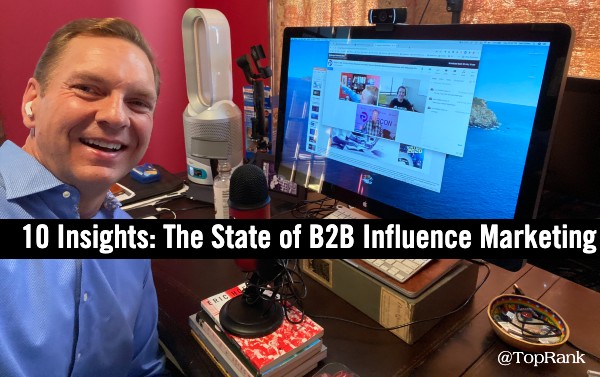


 Facebook opens Messenger API to Instagram messaging for businesses Facebook has launched an updated Messenger API that will allow for new automated responses and other integration features that aim to ease business communication via Instagram, Facebook recently announced.
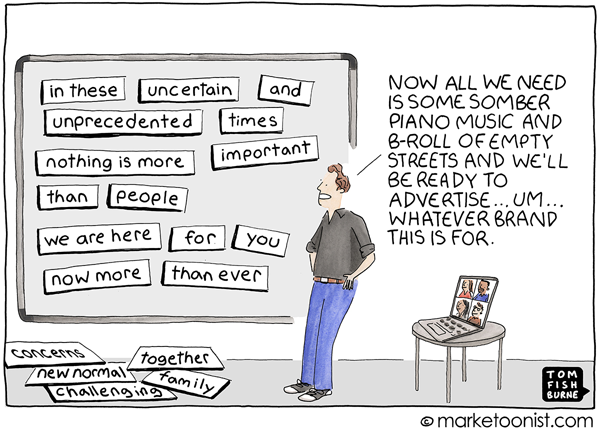 A lighthearted look at “generic advertising 'in these uncertain times'” by Marketoonist Tom Fishburne —


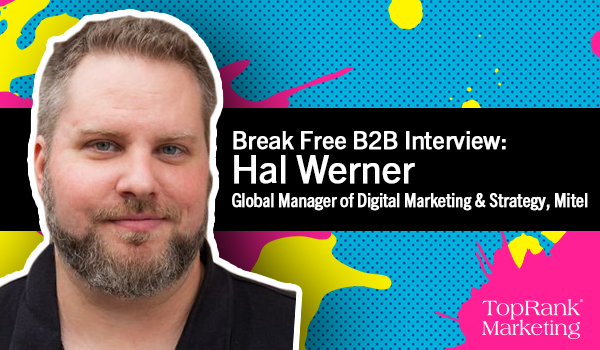 “If you want to create a piece of content about a topic, but you can’t create the best one, why are you creating it? If you don’t truly believe that you can outdo your competitors in the space for that function, then what are you wasting your time on?” “Whether you earn it or whether it’s paid for, you’re going to need more voices putting out there what you’re about so that not only people see you, but you begin to be associated with that thing at a critical mass.” [bctt tweet="“If you want to create a piece of content about a topic, but you can’t create the best one, why are you creating it?” @halwerner" username="toprank"] Watch our full interview with Hal in "
 “As content creators, sometimes we try to do everything that we possibly can on every channel. I think it’s important for content teams and marketing teams to go back and say, 'What do we need to stop doing? What are we doing that really isn’t giving us the result that we’d like? And how can we then focus more on the things that are working?' So ask yourselves, 'What can we stop doing today, so we have more time to do the things we’re really good at?'” [bctt tweet="“It’s important for content and marketing teams to go back and say, 'What do we need to stop doing? What are we doing that isn’t giving us the result we’d like? How can we then focus more on the things that are working?'” @EditorStahl" username="toprank"] Watch our full interview with Stephanie in "
 “The explosion of digital noise means that traditional marketing channels like ads are becoming less and less effective. What marketers need to think about is, how do I orchestrate multiple channels together?” [bctt tweet="“The explosion of digital noise means that traditional marketing channels like ads are becoming less and less effective. What marketers need to think about is, how do I orchestrate multiple channels together?” @jonmiller" username="toprank"] Watch our full interview with Jon in "
 “These days, the way you build the trust is showing how nimble and flexible you can be. Both in your development and your product, but also it has to be reflected in your marketing and your digital presence.” [bctt tweet="“The way you build the trust is showing how nimble and flexible you can be. Both in your development and your product, but also it has to be reflected in your marketing and digital presence.” @AdiBacharReske" username="toprank"] Watch our full interview with Adi in "
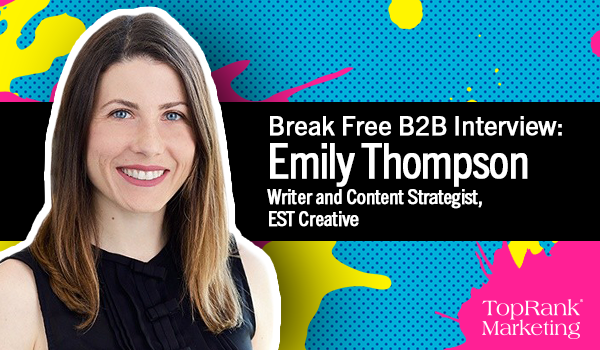 “When an organization can deliver strong content that helps inform people, it only builds that trust. Ultimately, people just want information that’s helpful to them. Especially with digital, it’s very easy today to try a new type of message, or a new way of communicating to someone. Let’s say you never blogged before, why not try a blog? Let’s say you never did email marketing, why not try it? Or a new type of message? The worst that can happen is you measure it, you learn from it, and you try something new.” [bctt tweet="“When an organization can deliver strong content that helps inform people, it only builds that trust. Ultimately, people just want information that’s helpful to them.” @BosCreativeCopy" username="toprank"] Watch our full interview with Emily in "
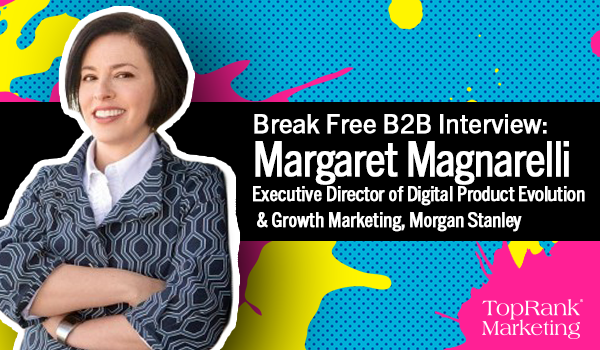 “We have to be able to give our customers as much information as we can, and take them as close to the line of purchase — to the experience of purchase — as we can.” “People can see through fake attempts to build trust. It’s hard for consumers to just believe a brand when they say they can do a thing. So if you have other people who say you can do a thing and you can do it well, and they can be your advocates, that’s really powerful.” [bctt tweet="“It’s hard for consumers to just believe a brand when they say they can do a thing. So if you have other people who say you can do a thing and you can do it well, and they can be your advocates, that’s really powerful.” @mmagnarelli" username="toprank"] Watch our full interview with Margaret in "
 “It’s about building a relationship that’s built on trust, not on hype. If you’ve built that trust and you’re adding that value to them that they trust you’re interested in their success, and you’re providing information and content and messaging and whatever it is, that will help them be successful.” [bctt tweet="“It’s about building a relationship that’s built on trust, not on hype.” @Gary_Gerber" username="toprank"] Watch our full interview with Gary in "
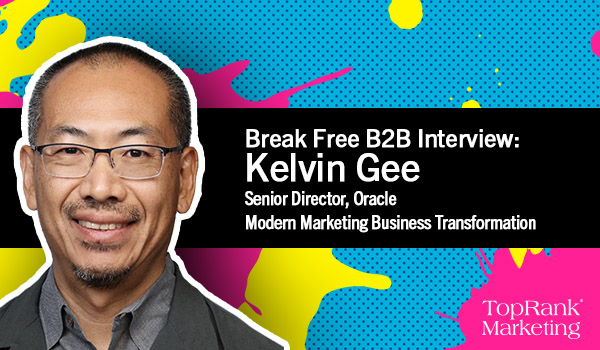 “We believe that data is the future of B2B marketing. If the goal is to deliver a better customer experience, you’ve got to break down those data silos.” “Once you consolidate all your data silos onto one bed, so to speak — in this case a customer intelligence platform or customer data platform or whatever you want to use — once you combine all that data, that’s when you start to see all the insights of your customers. All marketers should have empathy. What drives customer-centricity is empathy.” [bctt tweet="“We believe that data is the future of B2B marketing. If the goal is to deliver a better customer experience, you’ve got to break down those data silos.” @kgee" username="toprank"] Watch our full interview with Kelvin in "
 “Historically, marketing and sales have kind of been at odds a bit, which is unfortunate, but ABM brings the two together. The key to that is understanding the sales cycle, and understanding how sellers think and what they’re up against. The continuum should be from target account marketing, to ABM, to one-to-one ABM, all the way across that scale.” “You have to let go of templatized, old ideas. You have to break free of thinking about things the way we’ve always thought about them, and start really digging into how you can change what you’re doing and make it more efficient, more effective, but be creative about that.” [bctt tweet="“You have to let go of templatized old ideas to break free of thinking about things the way we’ve always thought about them and start digging into how you can change what you’re doing and make it more efficient and effective.” @DannyNail" username="toprank"] Watch our full interview with Danny in "
 “It really starts with understanding what customer needs are — where are their pain points — are there new and creative ways that we can help address those needs and pain points?” [bctt tweet="“It really starts with understanding what customer needs are — where are their pain points — are there new and creative ways that we can help address those needs and pain points?” — Julie Brown" username="toprank"] Watch our full interview with Julie in "
 “There’s so much data out there. We’re so busy with emails and meetings that you can really get stuck in a rut and forget to take the time to step back and look at the bigger picture.” “You also have to take stock sometimes and really look at your overall process, you can’t always be in the execution mode, you have to look at end to end, the processes and making sure that you’re developing kind of a holistic approach and not just selling a unit. You’ve got to think about your strategy and make sure you’re still aligned with that in what you’re doing day to day.” [bctt tweet="“There’s so much data out there. We’re so busy with emails and meetings that you can really get stuck in a rut and forget to take the time to step back and look at the bigger picture.” — Andre Ortolon" username="toprank"] Watch our full interview with Andre in "
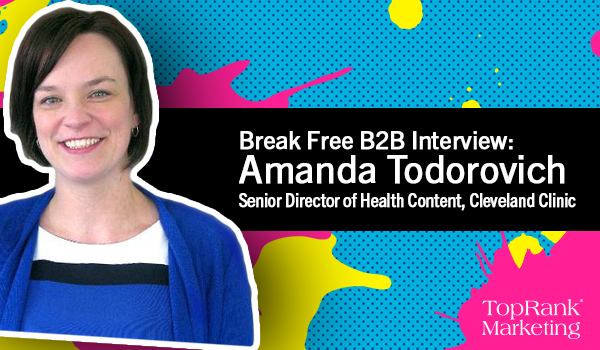 “I think it’s really important content marketing is not a campaign, it’s not a project, it’s not a one-off. We like to talk about our content channels and process like products, you know, you really need to invest in them. It’s a long-term strategy. It’s something that you really have to think about how you build a long-term committed relationship with that user – it’s not a one-and-done. There’s never really an end to it. It’s continuous and iterative.” [bctt tweet="“You really have to think about how you build a long-term committed relationship with the user – it’s not a one-and-done. There’s never really an end to it. It’s continuous and iterative.” @amandatodo" username="toprank"] Watch our full interview with Amanda in "
 “Do not just start calling influencers and say, 'I’m doing this campaign, do you want to be a part of it?' and be very prescriptive. You want to invite people to be in your program first and then do some brainstorming with them and see what they like, how they like to interact or what they like to do for companies.” [bctt tweet="“You want to invite people to be in your program first and then do some brainstorming with them and see what they like, how they like to interact or what they like to do for companies.” @AmishaGandhi" username="toprank"] Watch our full interview with Amisha in "
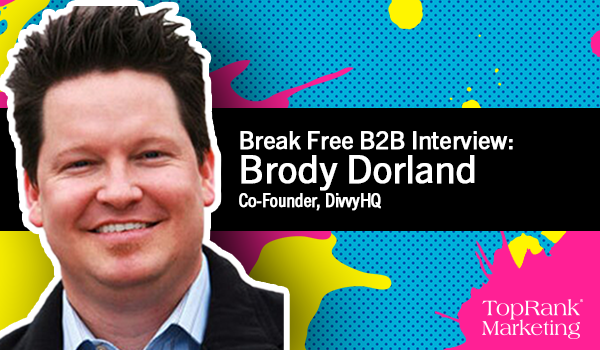 “The holistic content marketing world, which is non-campaign focused, continues to proliferate. It’s going to get better, but most agencies out there are still so campaign focused — that’s what they’ve been doing for decades. Getting out of that mindset, even from a logistics standpoint, is harder for an agency to do. Not to say that agencies can’t continually be involved in longer-term content marketing engagements, but it’s just it’s a different beast, a different animal than the typical world that they’ve been in for decades.” [bctt tweet="“Most agencies out there are still so campaign focused —that’s what they’ve been doing for decades. Getting out of that mindset, even from a logistics standpoint, is harder for an agency to do.” @brodydorland" username="toprank"] Watch our full interview with Brody in "
 “It takes a human element that cannot be taken out of this equation. If you can make data something that people associate with you, they trust you more, you can connect with them more, and you can tell better stories. All those things you want as a content marketer, as a B2B marketer, data can actually do for you. It’s not just good writing, good storytelling, and good creative anymore.” [bctt tweet="“All those things you want as a content marketer, as a B2B marketer, data can actually do for you. It’s not just good writing, good storytelling, and good creative anymore.” @clareondrey" username="toprank"] Watch our full interview with Clare in "
 “What’s the customer journey? And what are the content pieces we want to develop? And what are the voices we want to have in each of them, and how to then activate and amplify those?” [bctt tweet="“What are the content pieces we want to develop? What are the voices we want to have in each of them, and how to then activate and amplify those?” @JanineWegner" username="toprank"] Watch our full interview with Janine in "
 “We try to do mainly two things: build trust and also provide value. We want them to trust this and to think of us as the place to go that provides value from the very beginning of the relationship, from the first time they go to the website – oh yeah, this is really good. It’s providing me the answers to my questions and knowledge I need, it’s saving me money” [bctt tweet="“We try to do mainly two things: build trust and also provide value. It’s providing me the answers to my questions and the knowledge I need, and saving me money.” @mrjohnjoyce" username="toprank"] Watch our full interview with John in "
 “Relevancy and engagement are what’s important. Are the influencers actually experts in the areas you want to talk about? And are they going to have credibility with their end users? And then are they going to shed credibility onto your brand as a result?” [bctt tweet="“Relevancy and engagement are what’s important. Are the influencers actually experts in the areas you want to talk about? And are they going to have credibility with their end users?” @judytian07" username="toprank"] Watch our full interview with Judy in "
 “Focus on culture. There’s still a misconception that culture is about only HR. But culture is something that’s pervasive throughout the organization, and why we choose to work somewhere, why we choose to engage with the brand.” [bctt tweet="“There’s still a misconception that culture is about only HR. Culture is something that’s pervasive throughout the organization, and why we choose to work somewhere, why we choose to engage with a brand.” @MalihaQ" username="toprank"] Watch our full interview with Maliha in "
 “You can’t solve personalization before you solve customer understanding. At the top of the funnel, keep it very basic and personalize at a high level.” [bctt tweet="“You can’t solve personalization before you solve customer understanding. At the top of the funnel, keep it very basic and personalize at a high level.” @RtMixMktg" username="toprank"] Watch our full interview with Tom in "
 “I see the IT space and the marketing space are starting to come together so much more — particularly when you think about martech. We learned that it wasn't enough to just be marketing coming to IT with an answer. We really needed to involve our IT partners upfront in the process.” [bctt tweet="“The IT space and the marketing space are starting to come together so much more — particularly when you think about martech.” @zvenhaus" username="toprank"] Watch our full interview with Zari in "
 “Video marketing is intriguing, because it brings in real-life storytelling. The biggest factor in successful video content is cohesiveness of vision.” [bctt tweet="“Video marketing is intriguing, because it brings in real-life storytelling. The biggest factor in successful video content is cohesiveness of vision.” @adamjdunn" username="toprank"] Watch our full interview with Adam in "
 “Assume good intent from the people around you as you’re going through change behaviors.” [bctt tweet="“Assume good intent from the people around you as you’re going through change behaviors.” @cljardine" username="toprank"] Watch our full interview with Carol-Lyn in "
 “It’s about bringing all the channels together to create that seamless experience for the end user, and that person who you want to book a meeting with or have a signed contract with or whatever else you need from them. I think it’s just about being okay with being yourself and incorporating that into your whole corporate brand.” [bctt tweet="“It’s about bringing all the channels together to create that seamless experience for the end user, and that person who you want to book a meeting with or have a signed contract with or whatever else you need from them.” @sruthikkumar" username="toprank"] Watch our full interview with Sruthi in "
 “You look at the tools that we have at our disposal as CMOs, and it’s sort of like we are a Model T trying to get to the moon. I think the challenge that we have is only 13 percent of sales and marketing teams have any confidence in their data.” [bctt tweet="“You look at the tools that we have at our disposal as CMOs, and it’s sort of like we are a Model T trying to get to the moon.” @LataneConant" username="toprank"] Watch our full interview with Latane in "
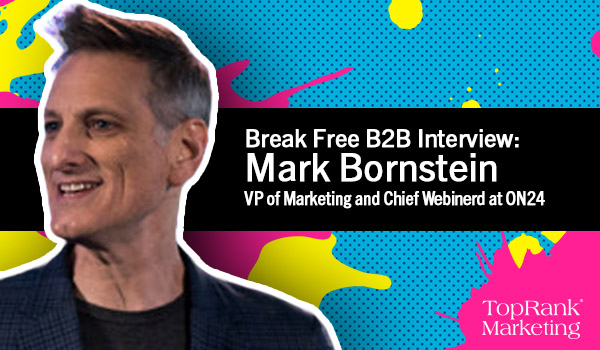 “It’s the experience you give, it’s the way you’re able to connect and interact with audiences that matters. Because that’s where you’re going to get the real data. That’s where you’re going to learn a lot about them. You want to create an environment where people are doing stuff, and it’s a multi-touch content experience.” “We need to find ways to get people who want our marketing to opt into our marketing. At a time when all of this digital noise is scaring them away. We need to bring them back in through more authentic, more human, more experiential marketing.” [bctt tweet="“We need to find ways to get people who want our marketing to opt in. At a time when all of this digital noise is scaring them away, we need to bring them back in through more authentic, human, and experiential marketing.” @4markb" username="toprank"] Watch our full interview with Mark in "
 “You really have to be cognizant of what is unique to each market. What’s the consumer behavior? Or what’s the consumer expectation within a given market or appetite for a type of execution. Be very much aware of the environment and the key nuances that are needed to effectively drive marketing in a region.” [bctt tweet="“You really have to be cognizant of what is unique to each market. What’s the consumer behavior? Or what’s the consumer expectation within a given market or appetite for a type of execution.” — Sofia O’Malley" username="toprank"] Watch our full interview with Sofia in "
 “When you look at being able to bring people together, it’s about creating a common message, a common purpose, and a common effort with everything that you do and how you go to market. Ensure that you have consistency of messaging to a target persona and target audience, regardless of what channel they’re choosing to interact with you on.” “The balance of power of information has shifted from the vendors to the consumers, to the buyers, and they can now go and search for information much more readily — much more freely — and they want that choice of how and when they choose to interact with you.” [bctt tweet="“When you look at being able to bring people together, it’s about creating a common message, a common purpose, and a common effort with everything that you do and how you go to market.” @seantcrowley" username="toprank"] Watch our full interview with Sean in "
