Tuesday, 16 March 2021

4 Ways B2B Marketers Can Spring Forward And Grow Content Marketing Success

Woman Looking Upward Optimistically

Woman Looking Upward Optimistically We're more than a year into the pandemic, and things are looking up. Vaccines are rapidly rolling out, states are dialing back restrictions, and a massive government stimulus is about to be distributed across the country. There is a hope, if not an expectation, that the economy will get on a roll this summer. Nothing can be taken for granted, but the outlook is bright. Numerous industries may experience rises in demand during the months ahead. This is a good time for companies serving those industries to be positioning themselves with smart growth strategies and ambitious marketing plans. With that in mind, here are some ideas and recommendations to springboard your B2B marketing into the summer months:

Spring Ahead: 4 Tips to Drive Fast Marketing Growth

#1. Let your raving fans guide you forward During the economic slowdown of the past year, it was common for organizations to look inward, immersing themselves in customer research and refocusing on relationships. Taking a curious approach to understanding your best customers, and what they value most in your product, can really pay off. In a recent writeup at The Next Web on surprising growth strategies for 2021, one suggestion from Andrea Hak is to tap into engaged and loyal users. She points to the example of SYLVAIN, a strategy and design consultancy hired by Spotify to help fend off an advance from Apple's streaming music platform. Hak shares this insight from SYLVAIN's Managing Director, Sherry (Sherzad) Rahmatian, who argues that a narrow focus on acquiring new users and expanding to new audience segments is misguided: “Power users and super fans often hold the secret sauce for a brand’s future growth. What we see is that smaller brands actually have an advantage in that they don’t have to dilute their marketing for the masses. Instead, they can focus on decoding what exactly makes people obsess over them, and use that to continuously iterate a better and better experience. This will naturally filter out to a wider audience, without losing what made it special.” Hak later notes that, "By the end of 2020, Spotify increased its number of premium subscribers by 29%, bringing it to a whopping 124 million." The size of your company and its customer base will dictate the extent you're able to lean into this strategy. But most marketing departments today have some method of gauging the loyalty and strength of their customer relationships. Identify and study those most avid fans. Center your marketing on that which drives their affinity. [bctt tweet="“Identify and study those most avid fans. Center your marketing on that which drives their affinity.” — Nick Nelson @NickNelsonMN" username="toprank"] #2. Strategize around trust, purpose and empathy It might be time to rethink your marketing messages of the past. More than ever, brands in the new era need to ensure they are aligning and resonating with their most valuable audiences, and developing connections that move beyond the traditional problem-solution framework. In a recent study from Iterable, 87% of brand marketers “said their company felt the need to change its marketing strategies to better build consumer trust” amidst the turmoil of 2020. Ninety-one percent indicated that they plan to stick with this altered approach in 2021. Trust is built, first and foremost, by demonstrating a keen understanding of your audience: circumstances, aspirations, pain points. It’s also strengthened by demonstrating that you share their values and priorities. This is where communicating a deeper purpose comes into play. “Even before the pandemic, 74% of B2B companies considered purpose to be relevant in business growth,” writes Norman Guadagno in an article at MarketingProfs. “In 2021, leading with purpose is even more important … Show customers what your brand's values are and how your company is living up to those values through its actions, whether by implementing institutional change within the company, supporting a social cause, or demonstrating an environmental commitment.” I’ve written here in the past about why and how today’s B2B brands should take bold stands while avoiding costly missteps. More recently, our Lane Ellis provided a look at the desired end result of these efforts, sharing 10 ways trust creates standout B2B marketing experiences. #3. Merge personalization and relevancy On the Customer Think blog, Uberflip CMO Randy Frisch recently argued that in B2B marketing, personalization and relevancy must be the same. He did a nice job of articulating a problematic disconnect in content marketing today: Too often, “personalization” is treated as plugging in a custom name via merge fields, or mentioning someone’s company or industry in a subject line. As Frisch writes, these things are fine but essentially the bare minimum. It’s all about connecting through acute relevancy. There are ways to do this at scale. I especially like the comparison Frisch draws here, given that large-scale live marketing events probably still won’t be a thing for a while: “Remember at events how marketers strove to offer specific content tracks from curated speakers in order to attract their audience and engage them? Think about mirroring that level of personalization (relevance) in the digital mix of content you’re now using. The variety of blogs, ebooks and videos being sent online should feel every bit as tailored to your audience as the breakout sessions and VIP talk tracks you would invite them to at an event.” [bctt tweet="“Remember at events how marketers strove to offer specific content tracks from curated speakers? Think about mirroring that level of personalization (relevance) in the digital mix of content.” — Randy Frisch @RandyFrisch" username="toprank"] #4. Engage through new video and audio channels  “Video and audio in recorded or live formats have emerged as a top preference for customer engagement,” wrote TopRank Marketing CEO Lee Odden in a blog post earlier this month. “Whether live-streaming on LinkedIn, Twitter and Facebook or publishing podcasts and hosting rooms on breakout audio social network, Clubhouse, content marketers have a significant opportunity to create more engaging experiences to meet the evolving expectations of their customers in 2021.” You’ll find no bigger advocate than me for the enduring value and staying power of text-based content, but the rise of these immersive mediums is undeniable. Forced indoors, people started consuming more digital content than ever in 2020, and these newly formed habits will surely stick to some extent. Brands should seek to experiment with live-streaming, innovative audio platforms, virtual events, and interactive experiences. Clubhouse, which has been valued at a staggering $1 billion in its nascent startup state, represents an opportunity to get ahead of the curve. If you can get an invite.

More Resources and Guidance to Drive You Forward

Generally speaking, an empathetic content marketing approach that dabbles with emerging channels, leads with purpose, and is shaped by customer insight will put B2B brands in excellent position to score big in 2021. The time is now to invest and lean in. For more tips and advice on leveling up your marketing efforts this summer, here’s some addition reading to carry you forward:

The post 4 Ways B2B Marketers Can Spring Forward And Grow Content Marketing Success appeared first on B2B Marketing Blog - TopRank®.


Article Source: http://bathseoexpert.blogspot.com/2021/03/4-ways-b2b-marketers-can-spring-forward.html

Monday, 15 March 2021

B2B Influencer Marketing Strategy: 5 Questions to Ask First

5 Questions for a B2B Influencer Marketing Strategy

5 Questions for a B2B Influencer Marketing Strategy It's no mystery that we're big fans of influencer marketing where B2B brands engage with industry experts and key opinion leaders to drive conversations, consideration and conversions. Marketing leaders at B2B companies large and small are realizing how much influence can play a role in virtually every customer communication. As 2021 picks up steam, the practice of influencer marketing presents unique opportunities to optimize digitally transformed B2B marketing. That said, while the role of influence can be universally present in content and communications, the approach that will work for any given B2B brand is by no means cookie cutter. Influencer engagement is not simply an advertising buy or some kind of programmatic marketing tactic. It's simultaneously dynamic and open to certain kinds of optimization and scale through process, operations and expertise. Before embarking on a pilot, campaigns or an evolved always-on influencer program, it's important for B2B marketers to answer a few key questions to make sure the rationale is sound, the approach has merit and the expectations line up with resources and goals. At TopRank Marketing we've helped numerous B2B brands run their very first influencer marketing pilot projects and campaigns. Our work with B2B brands like LinkedIn, SAP and Dell over the past 9 years has taught us that there are many key questions to be answered in order to ensure
  • Influencer marketing makes sense for a particular B2B brand
  • That a specific approach matches goals, resources and expectations
  • The tactics of identifying and engaging influencers are appropriate to content formats, channels and audience
  • The program reaches expected KPIs and drives value both for the business and influencers
  • Early efforts set the stage for future success
To help B2B brands thinking about launching an influencer marketing initiative, here are 5 of the most important questions to answer:

1. What is a B2B influencer for our brand? Our customers?

Success with B2B influence means avoiding falling into the popularity trap and thinking that all influencers must have a massive following. An influencer in the B2B world is someone that has domain expertise, is recognized by peers for that expertise, creates content or communicates about that expertise, and has attracted the attention and trust of a network. B2B influencers are also often called subject matter experts, key opinion leaders, or simply experts about a certain topic. This differs than in B2C where popularity and being able to publish influencer-created content on their own channels to a large audience reigns supreme. B2C influencers are most often very self aware of their actual or aspirational influence and bring content creation, personality, persuasion and publishing skills to the situation. For B2B influencers, the idea of being an "influencer" may not be a priority, so B2B brands need to find ways to activate and engage them in ways that might be new to the influencer. Fortunately, there are best practices around how to nurture both external and internal subject matter experts to collaborate with marketing in ways that can drive authentic conversations amongst a desirable audience. There are several key characteristics to look for in a B2B influencer: Proficiency, Popularity, Personality, Publisher, Promoter.  For a deeper dive into what top B2B influencers look and sound like, check out Season 3 of Break Free B2B in progress. Understanding that everyone has some degree of influence is as important for a new influencer marketing effort as is understanding that B2B brands need to be clear about what topics they want to be influential about. Finding B2B influencers for a specific brand means identifying the topics that matter to customers in the context of the B2B brand's marketing narrative. Topics of importance to customers relative to the B2B brand's key messages, products and solutions helps us understand whether a particular influencer has the attention and ability to influence their network. We do that by using software that helps evaluate a given influencer's audience for topical relevance, resonance and reach. There are different types of influencers to engage according to the type of influencer marketing project being implemented. Some programs might call for celebrity level "brandividuals", others might focus more on those with industry analyst level expertise, or niche influencers that have deep product expertise and specific media creation skills that align with the content preferences of a B2B brand's audience. At the same time, some influencers might already be fans of your B2B brand and others might be strong advocates of ideas that align with your brand but not be advocates yet. The opportunity in identifying what a B2B influencer looks like for your brand starts with understanding the topics of influence that matter to your customers and that are most relevant to your solutions. That topic understanding can be extended to the creation of an ideal influencer profile and the matching of influencer types to the expectations and experiences created for customers. To answer, "Where can I find B2B influencers?" marketers need to look beyond their own opinions and experiences and towards data. Influencers that create evidence of their expertise through digital content can be identified with influencer marketing software or social media software. However, keep in mind that many B2B influencers do not focus solely on social media to proclaim their expertise and more in-depth research into industry associations, special interest groups, events, publications, email newsletters and emerging formats like Clubhouse should be conducted.

2. What can we expect to achieve working with influencers?

Virtually all B2B brand communications with customers is a consideration for including 3rd party expertise for credibility and help with distribution. Fundamentally, influencers can create value for B2B brands in a few different ways:
  • Add credibility to brand content
  • Help brand content reach new audiences through promotion
  • Provide B2B brands with advisory services
  • Perform as a brand advocate through ongoing content engagement
  • Help create content for thought leadership and demand gen purposes
  • Add signals of credibility to content for SEO
  • Facilitate content distribution and brand social network growth
  • Provide expertise for earned media, events and marketing content
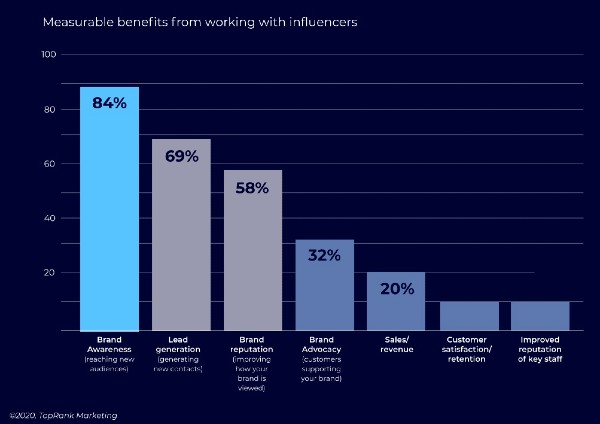
In our research as reported in the State of B2B Influencer Marketing Report, we found that the measurable benefits for B2B brands to work with influencers included: benefits working with B2B influencers What's important for B2B marketers to understand when it comes to what's possible with influencers is that we're talking about partnering with people, not simply using them to some brand end. Rather than thinking of influencers only as a means to an end or a tool for content creation and distribution, it is more valuable for all when B2B brands think of influencers as partners they can work with to achieve mutual goals. That partnership can turn to authentic and enthusiastic brand advocacy more quickly than a transactional approach. For more specific ideas, check out this list of 25 B2B influencer marketing campaign and engagement ideas.
3. What are some good influencer engagement models?

Many early stage influencer programs start with micro-activations as part of a nurturing effort to develop relationships between brand and influencer. In many cases, an agency is tasked with creating these connections because they have unique expertise at influencer outreach and/or may already have the desired influencers in the agency network. The right engagement model really depends on the approach. For a pilot influencer content marketing campaign designed to create a business case for potential expansion of an influencer marketing program that has some lead time, it might be best to develop quick rapport with influencers by recognizing their expertise publicly. Then follow up and invite them to collaborate on small asks with great exposure. Through these early micro-activations, the right influencers can be sorted for a larger contribution to the pilot content project. See this case study on how LinkedIn has taken a relationship building approach to their always-on influence program working with sales and marketing influencers. Alternatively, if there is not much lead time for organic relationship building with a pilot, then professional influencers can be engaged for their services to contribute to the pilot. The cost and perceived authenticity of content disclaimed as sponsored may be worth it to get a pilot out quickly. Or some combination of organic relationship building and paid influencer engagement might be most appropriate. Understanding the right engagement model can be helped in part by reviewing solid B2B influencer marketing examples and case studies to understand what goes into successful B2B influencer marketing campaigns. Also, it's important to understand that working with influencers for an industrial or manufacturing business might be a bit different than how influencer marketing for tech companies might work. The topics of interest to customers and of most relevance to influencers and the brand will help identify the right influencer program approach, influencer identification and engagement. Many pilots lead to sequences of campaigns which may engage the same influencers or different influencers each time. Lack of engagement in between campaigns will make securing influencers more difficult. B2B brands that are more mature in their influencer marketing efforts engage in always-on influencer programs. In fact, the State of B2B Influencer Marketing Report found that 12X more B2B marketers using an always-on approach were very successful with their influencer marketing compared to those marketers that implementing periodic campaigns. Working with a small group of influencers can be a great place to start, but that small group should be backed by a much larger list of researched candidate influencers. As relationships develop through the course of different collaborations, B2B marketers will refine and find the right influencers. A VIP group of influencers might be created as Adobe has with its 60+ Adobe Insiders being activated at individual, small group or large group levels depending on the situation.

4. How does "dark influence" fit in our mix?

Understanding the channels where customers are spending time discovering, consuming and engaging with content is central to identifying sources of influence. But not all B2B influencers are social media rockstars. To understand where and how the right experts are influential to the customers of a B2B brand, thoughtful research must be conducted to identify customer preferences for content and people that they trust, subscribe to and are influenced by. In some cases, the social media connection to B2B influence is indirect. While many business people are doing business during their 9-5, increasing numbers of business people are following industry experts on social channels. They access those channels before and after work as well as periodically during the day. For those influencers and customers that are not engaging via social media, content discovery, consumption and engagement preferences research will reveal the email newsletters, publications, associations, events, groups and even search terms they use to connect. These non-social media channels are opportunities for influence as well. B2B marketers need to do the research to map these sources of engagement and identify influencers that might be good partners for those channels. Another consideration is the role that LinkedIn plays in terms of influencer performance tracking. Since the vast majority of LinkedIn is not public nor do they provide easy access via API, the social data cannot be crawled in the way that Twitter, some Facebook content and other social networks are. Influencer engagement on LinkedIn may require use of tools made available from LinkedIn like Sales Navigator. Here are some ideas on how to engage influencers on the LinkedIn platform. Working within the world of dark social for influencer marketing means connecting with influencers that use these channels and engaging them on collaborations where they exert influence.

5. What are the most important operational considerations for a B2B influencer marketing program?

For large enterprise organizations, there is often a debate about how much influencer marketing should be centralized in the organization vs. with business units, divisions and regions. When influencer marketing is new to an organization, there is centralization and programs are dictated as such. Some influencers may be universally relevant across and organization but within each market where a B2B brand operates, there will likely be more niche influencers specific to those markets. How an influencer marketing program is defined will often include both the universal truths that are relevant for the brand overall and specific programs with unique goals, topics and measures of success. Some of the most important operational considerations for an influencer marketing program include:
  • What department owns influencer marketing?
  • What processes will be used to to perform the functions of influencer marketing to ensure consistency and quality?
  • What software will be used to identify, engage, communicate with and measure influencers?
  • What budgets, staffing and external resources will be needed short and long term?
Beyond measures of success, software and ownership with the B2B brand of an influencer program is how to work with a specialist B2B influencer marketing agency to help develop strategy and planning, influencer identification and recruitment, collaboration and creation of influencer / brand content assets. In the State of B2B Influencer Marketing Report that surveyed hundreds of B2B marketers, the top tasks handled by agencies included:
  • Identifying influencers 79%
  • Managing influencer relationships 76%
  • Developing the strategy 71%
  • Measuring effectiveness 66%
  • Integrating with other marketing efforts 63%
  • Implementing campaigns 60%
  • Managing influencer marketing technology 44%
While there are many B2B marketing resources out there to help brands with everything from research and strategy to planning, implementation and measurement, there are simply not that many B2B influencer marketing agencies that have:
  • Established influencer marketing strategy frameworks based on years of experience
  • Extensive relationships with a network of B2B influencers in various verticals
  • Tried and true tactics for accelerating B2B brand and influencer relationships
  • Content creation and repurposing capabilities that are unique to influencer collaborations
  • Influencer marketing measurement and reporting expertise
  • Savvy on how to maintain ongoing influencer relationships in between campaigns
The good news is that the number of B2B influencer marketing agencies with legitimate skills and experience is growing as awareness grows around the role of influence across the entire customer lifecycle for business customers. There are certainly more questions than these to be considered as well as variations on the questions that have been listed in order for B2B marketers to gain confidence that their particular approach to an influencer marketing effort creates the expected value for all involved. In many cases, marketing missteps can be avoided by ensuring the fundamentals are solid and that's what this list of questions is meant to do - cover the bases that are essential for a thoughtful, meaningful and productive influencer marketing effort.

Influencer marketing is a relationship focused business and that means it's dynamic and there are no silver bullet answers.

Remember, influencer marketing is a relationship focused business and that means it's dynamic and there are no silver bullet answers. B2B brands that stumble blindly into an influencer engagement effort may experience disappointing results without the "been there, done that" and "we do this every. single. day." type of expertise that is rare, but available through specialist agencies and consultants.

The post B2B Influencer Marketing Strategy: 5 Questions to Ask First appeared first on B2B Marketing Blog - TopRank®.


Article Source: http://bathseoexpert.blogspot.com/2021/03/b2b-influencer-marketing-strategy-5.html

Friday, 12 March 2021

B2B Marketing News: Emotional Connections Top Brand Loyalty Study, YouTube’s New Metrics, & Google My Business Adds Audience Discovery Data

2021 March 12 MediaPost GWI Chart

2021 March 12 MediaPost GWI Chart How and Why B2B Marketers Are Using Intent Data [Report] 56 percent of B2B marketers use intent data to identify new target accounts, while 51 percent use this data to align sales and marketing, according to recently-released report data of interest to digital marketers. MarketingProfs Post Engagement Rates Remain Far Higher on Instagram Than Facebook or Twitter Across industries, Instagram saw an average engagement rate more than four times that of Facebook during 2020, according to a recently-released report that examined more than 22 million business page posts on Instagram, Facebook, and Twitter. MarketingCharts Microsoft Bing updates search results interface to make it more visually immersive Microsoft's Bing has augmented its search result experience to include expanding image carousels and infographic-like knowledge panels, in addition to several other new additions, Bing announced recently. Search Engine Land Google Gains Additional Data From Performance To Target Ads Google's popular My Business service has added a variety of new audience discovery features, along with updated reporting of performance data of interest to digital marketers, the search giant recently announced. MediaPost YouTube Analytics adds ‘new’ and ‘returning viewer’ metrics Google's YouTube has brought digital marketers new information on unique and returning viewers, in analytics additions that are part of YouTube’s latest metrics update, the firm recently announced. 9to5Google Data Shows How Emotional Connections Fuel Consumer Loyalty 80 percent of consumers say they want to build relationships with brands, and some 57 percent said that they didn't change brands despite the global pandemic — two of several statistics of interest to online marketers in recently-released Merkle Loyalty Barometer report data. MediaPost 2021 March 12 Statistics Image Despite Inbox Competition, Marketers Confident in Email’s Effectiveness Some 39 percent of marketers said that their email marketing effectiveness held steady during 2020, while 30 percent said that they found email marketing to be slightly more effective than during the previous year, according to recently-released survey data. MarketingCharts Twitter is Testing a New 'Undo' Option for Sent Tweets Twitter has looked into implementing a brief five second window of time during which users could recall their tweets, a move that would primarily allow for the correction of grammar and spelling mistakes, Social Media Today reports. Social Media Today Google Discovery Campaigns on the Rise 73 percent more advertisers were using Google Discovery campaigns during the fourth quarter of 2020 compared to the first quarter of the same year, up from 51 percent during Q3, according to recently-released Google Ads Benchmark report data. MarketingCharts Info Is King: Study Finds Americans Simply Want Ads To Tell Them About Products 49.7 percent of U.S. consumers said that they most want production information from the advertising they receive, with 29.2 percent seeking ad relevance and 17.8 percent looking for personalized ads, according to newly-released research study data. MediaPost ON THE LIGHTER SIDE: 2021 March 12 Marketoonist Comic A lighthearted look at “brand safety whack-a-mole” by Marketoonist Tom Fishburne — Marketoonist Pinterest hosts its first ad summit and opens new video ad space to brands — Ad Age TOPRANK MARKETING & CLIENTS IN THE NEWS:
  • Joshua Nite — What’s Trending: Fine-Tune Your Content Strategy — LinkedIn (client)
  • TopRank Marketing — Marketers You Should Know: 16 Brilliant Thinkers to Follow on LinkedIn — LinkedIn (client)
  • Lee Odden — B2B-Influencer-Marketing: Die Imagepfleger [In German] — ONEtoONE
  • Lee Odden — Chris Boggs: A Drink With Brent - 03/05/2021 — Brent D. Payne
Have you found your own key B2B marketing story from the past week of industry news? Please let us know in the comments below. Thanks for taking the time to join us for the TopRank Marketing B2B marketing news, and we hope that you will return once again next Friday for more of the week's most relevant B2B and digital marketing industry news. In the meantime, you can follow us at @toprank on Twitter for even more timely daily news.

The post B2B Marketing News: Emotional Connections Top Brand Loyalty Study, YouTube’s New Metrics, & Google My Business Adds Audience Discovery Data appeared first on B2B Marketing Blog - TopRank®.


Article Source: http://bathseoexpert.blogspot.com/2021/03/b2b-marketing-news-emotional.html

Thursday, 11 March 2021

Break Free B2B Marketing: Eric Vanderburg of TCDI on The Changing Cybersecurity Landscape

Eric Vanderburg

Eric Vanderburg For more than a decade our team at TopRank Marketing has fostered a potent community of leading influencers, developing close relationships with subject matter experts in a wide variety of industries. When it comes to B2B influencer marketing, it's only natural to wonder just what an industry influencer actually looks like? In our third season of Break Free B2B Marketing video interviews, we’re continuing in-depth conversations with a powerful selection of top B2B influencers, and taking a close look at the issues that each expert is influential about in their industry. Every successful B2B influencer has a rare mix of the 5 Ps — proficiency, personality, publishing, promotion, and popularity — as our CEO Lee Odden has outlined in “5 Key Traits of the Best B2B Influencers.” Combining every one of these qualities and plenty more is Eric Vanderburg, vice president of cyber security at TCDI, who we’re thrilled to be profiling today. Cybersecurity has always been a priority for smart B2B marketers and business owners, but it’s never been more of a concern than it is right now. In fact, a recent CSO survey has found that over 60% of small and medium business owners are more concerned now about security risks for their remote employees than they were at the beginning of the pandemic. That fear isn’t without good cause. Phishing attacks are up. People are spending more time online than ever before — not just working, but shopping, chatting, browsing, and beyond. Potential pathways to risk are everywhere and that begs the question: how do you keep your employees and data safe? Luckily, while there are a lot of risks out there, there are also industry experts leading the charge when it comes to avoiding them. Experts like Eric Vanderburg. Eric has made a name for himself helping equip businesses with the right tools and knowledge to keep their cybersecurity practices effective and up-to-date. That’s the reason why our Joshua Nite interviewed him for today’s new episode six of the Break Free B2B Marketing Interview series.

Break Free B2B Interview with Eric Vanderburg

If you’re interested in checking out a particular portion of the discussion, you can find a quick general outline below, as well as a few excerpts that stood out to us.
  • 3:01 - Cybersecurity progress separate from the pandemic
  • 4:10 - What can remote workers do at home to support better security for their organizations?
  • 5:27 - Are recent cybersecurity changes here to stay or are we going to regress to the mean?
  • 7:01 - Any cybersecurity mistakes being made that should be addressed?
  • 8:10 - What will the cybersecurity landscape look like when things start to open up again?
  • 9:20 - What can executives or B2B leaders do to better plan for the future?
  • 11:34 - How do you become a thought leader in the cybersecurity space and build an audience?
  • 15:03 - Does having a large following ever get in the way of saying what you want to say?
  • 18:56 - What makes Eric more (or less) likely to want to be involved in a project?
  • 21:07 - Where can people find Eric if they want to get in touch?
Josh: Have you seen any people that were truly prepared for something like this to happen, or has it generally been folks in a bit of a scramble? Eric: I wouldn't say anybody's been fully prepared — there's been a little bit each company's had to do. Some companies have been a little bit better prepared. On the technology side, they had what they needed to enable employees to work from home and have the security in place, and they had good procedures and training. But then, you know, they miss out on some other elements and communication breaks down. And now business email compromise was their downfall, or they got all the others and they didn't do the training, or they had issues implementing the technology, and vulnerabilities or other issues allowed attackers in. So you know, there's a lot of different things you have to do to be secure. And with this pandemic, it's caused many companies to have to react. Unfortunately, when you're reacting without necessarily having a plan in place, it introduces faults and errors. Josh: We've talked a lot about — when we talk about the pandemic — how people's five year plan suddenly became a five week plan or a five day plan. I can imagine there are just a ton of moving pieces that people had to consider as they move forward? Eric: Yes, there really were these complete changes in the way we do business, and not one that companies necessarily plan for somewhere along the line — distributing the workforce and utilizing more contract work, or using us as part of their digital transformation. But others were just blindsided by the whole thing. [bctt tweet="“Unfortunately, when you're reacting without necessarily having a plan in place, it introduces faults and errors.” — Eric Vanberburg @vtamethodman #BreakFreeB2B" username="toprank"] Josh: Are you seeing that as some of these things are rolling out, that there are things that people are overlooking, or getting wrong, or making mistakes that you'd want to correct? Eric: Yes, well, there's quite a few. When a lot of companies that have employees who start working from home, many are using personal equipment, maybe they didn't have a company device, or have a way of properly managing those. So we've had a huge influx out of BYOD — bring your own device — and some companies weren't ready for that. They didn't have a process in place that others were able to take care of with the right approach, either securing those devices with endpoint agents, or just taking the personal device, not really out of the mix, but connecting them into virtual desktops and keeping local resources. And that's helped to secure it, and also giving them the same applications and everything else that they had when they were in the workplace. Josh: I think you address pretty well some of the steps that people can take to solve some of these security issues. So let's talk about when things are starting to open up again. What do you think that the cybersecurity landscape is going to look like as that starts to happen? Eric: I think that we're going to certainly have quite a few new players. I think we're also going to have companies who are much more agile, or used to using some of those resources they are utilizing, which could be in addition to the regular workforce — a lot of other outside consultants or flex resources. We're going to see fewer people in the office, and maybe some offices closing down and opening up other regional places because it's easier to work remotely and to coordinate. Certainly a lot more use of technologies to help coordinate and share, your project management type tools and communication platforms and all that — those are have already seen a big surge. I think we're going to see a lot more there. [bctt tweet="“We're going to see fewer people in the office, and maybe some offices closing down and opening up other regional places because it's easier to work remotely and to coordinate.” — Eric Vanberburg @vtamethodman #BreakFreeB2B" username="toprank"] Keep your eye on the TopRank Marketing Blog and subscribe to our YouTube channel for more Break Free B2B interviews. Also check out episodes from season 1 and season 2. Take your B2B marketing to new heights by checking out out previous season 3 episodes of Break Free B2B Marketing:

The post Break Free B2B Marketing: Eric Vanderburg of TCDI on The Changing Cybersecurity Landscape appeared first on B2B Marketing Blog - TopRank®.


Article Source: http://bathseoexpert.blogspot.com/2021/03/break-free-b2b-marketing-eric.html

Wednesday, 10 March 2021

10 Ways Trust Creates Standout B2B Marketing Experiences

One standout red citrus slice in a sea of yellow slices image.

One standout red citrus slice in a sea of yellow slices image. What does trust bring to the B2B marketer’s strategy table in 2021? While it may be simpler to ask what trust can’t do for B2B marketers and brands seeking to develop successful strategies for our eventual post-pandemic professional landscape, savvy marketers are best served by taking a close look at all the things that trust can do. Research has shown the power of trust in developing successful marketing, which is why the theme of trust is a central tenet running through our own State of B2B Influencer Marketing Research Report, featuring survey data, case studies from B2B brands of all sizes, insights from top B2B marketing experts, plus a list of 20 top influencer marketing practitioners from B2B brands. Brand trust, advocacy and customer experience are among today's most important goals for B2B brands, but why is trust so important, and how can brands build trust? Here are 10 ways trust creates standout B2B marketing experiences, from building better brands to providing measurable performance, and so much more. Let’s step right up to a virtual cavalcade of marketing approaches that benefit from a greater focus on trust, and look at what we can do to build greater trust into our B2B marketing efforts.

1 — Trust Builds & Strengthens Relationships

You can’t top trust when it comes to building and strengthening relationships, whether it’s creating powerful new customer connections or nourishing your existing business partnerships. Relationships with little trust won’t blossom, and usually won’t last very long either. By consciously making trust a cornerstone of marketing efforts — and dedicating the time and effort necessary to do so — brands can make a concerted effort to build trust into every facet of operations. [bctt tweet="“If you want to be a trustworthy company, it can’t be just a marketing philosophy. It has to be a business philosophy.” — Margaret Magnarelli @mmagnarelli" username="toprank"]

2 — Trust Delivers Dedicated Customers & Fans

Brands that earn trust have already won most of the battle to gain dedicated customers and fans. Trust helps turn customers into true brand advocates and impassioned fans. The effort and time to build trusting relationships between brands and customers can be daunting for B2B marketers, which is one of the reasons why more brands are turning to influencer marketing, with subject matter experts who have already built time-tested trust. [bctt tweet="“It’s hard to create a great experience if customers don’t trust brand communications.” — Lee Odden @LeeOdden" username="toprank"]

3 — Influence Is Build On Trust

Intertwined with trust is influence, and the two serve to reinforce one another in the push to deliver the best B2B marketing possible. Industry experts rely on the trust they’ve earned over time with their following, using their influence to help brands build trust. Using the power of influence to build trust is one of our specialties at TopRank Marketing, and to help you learn more about the processes involved, here are several recent articles we've published detailing how influence grows trust: [bctt tweet="“Look beyond individual campaigns and think about how the brand and influencer relationship can create mutual value, influence and trust over time. That trust will translate to trust built amongst customers.” @LeeOdden" username="toprank"]

4 — Trust Grows Great Content Marketing

Great B2B content marketing is also underpinned by trust, as information that is worthy of being shared is most often the type that best answers the questions customers are asking — solutions that will only succeed when they are based on share-worthy trust. Creating articles, videos, podcasts or any other manner of today’s digital asset that customers will want to share and keep coming back to get more of is a difficult task, but one that thrives when trustworthy information is delivered. Best-answer content's role in building trust is covered in the following articles we've published: [bctt tweet="“Trust is a currency. It’s arguably the most valuable currency in today’s B2B marketing environment. And much like real money, it needs to be earned; the risks of attempting to counterfeit trust are grave.” — Nick Nelson @NickNelsonMN" username="toprank"]

5 — Influence-Built Trust Combats Increased Skepticism

The past several years have seen an increase in customer skepticism, especially when it comes to the marketing they have traditionally relied on to learn about potential new solutions. Trust can be the element that differentiates one brand’s success from another’s disappointment. The issue of brand trust made the list of 2021's top trends in our CEO Lee Odden's "Top B2B Marketing Trends for 2021," in which he observed, "With an 'epidemic of misinformation and widespread mistrust of societal institutions,' 70 percent of respondents to the 2021 Edelman Trust Barometer study said brand trust is more important today than it was in the past." [bctt tweet="“Once trust has been lost, it’s nearly impossible for brands to rebuild sustainable, honest relationships with their customers.” — Kevin Cochrane @kevinc2003" username="toprank"]

6 — Always-On Efforts Thrive On Trust

2021 may be the year of always-on marketing, as the strength of ongoing programs over one-off campaigns has been shown to be a key success differentiator. Building thriving always-on programs requires earning and maintaining trust, however, rather than the kind of stop-and-start efforts that interrupt truly lasting business relationships. Always-on marketing efforts need to be based on trust in order to be sustainable. To help you build a sustainable always-on strategy with an eye for building ongoing trust, the following articles explore always-on influence: [bctt tweet="“The benefit of an Always-On approach creates value for your customers by making content more relevant, trustworthy, and actionable.” — Lee Odden @LeeOdden" username="toprank"]

7 — Trust Is Platform Agnostic

In today’s diverse social media platform landscape, B2B marketers are keen to use elements that provide value in a platform-agnostic way, and trust is one of the key ingredients that works just as well on Clubhouse, LinkedIn, Twitter, or Instagram. When a brand has built a legacy of trust, it translates to whichever platform or content vehicle its marketing messages are delivered through, making trust one of the few fundamental qualities that endure over time, even as social platforms come and go. How can B2B brands boost confidence using some of these various platforms, especially live-stream video, podcast and Clubhouse marketing? Lee recently explored how partnering with influencers who understand innovative content formats creates more relevant, meaningful and effective B2B content marketing experiences, in "How B2B Brands Can Boost Confidence in Livestream Video, Podcast and Clubhouse Marketing." [bctt tweet="“When an organization can deliver strong content that helps inform people, it only builds that trust. Ultimately, people just want information that’s helpful to them.” — Emily Thompson @BosCreativeCopy" username="toprank"]

8 — Trust Is SEO Friendly

Not only is trust search engine optimization (SEO)-friendly, trust is one of the most important and oftentimes overlooked elements in creating the type of best-answer B2B content that can organically feature in search rankings. In essence, a core facet of all search engine firm efforts is the ability of their algorithms to surface the content that is the most trustworthy. How trust plays into the changes 2021 has brought about in SEO efforts is among the subjects 12 top industry experts explored in our annual trends and predictions article, "12 Top B2B SEO Trends & Predictions for 2021." [bctt tweet="The biggest overarching trend in SEO in recent years which will undoubtedly continue in 2021 is the focus on E-A-T: expertise, authoritativeness, and trustworthiness. — Lily Ray @lilyraynyc" username="toprank"]

9 — Trust Provides Measurable Performance

When your efforts are built on trust and the content you’re producing reinforces trustworthiness, B2B marketers can chart their success using any number of engagement metrics. While it may be hard to specifically pinpoint which particular brand engagement metrics are solely the result of having built customer trust and loyalty, trust is the kind of all-encompassing element that — although it may not have its own line item — delivers performance increases. Here are several helpful articles we've written that help B2B marketers collect and interpret the right engagement metrics: [bctt tweet="“Integrating influencer content is a direct line to building trust and customer confidence.” — Ann Handley @annhandley" username="toprank"]

10 — Trust Builds Better Brands, Brand Advocates, & Teams

It’s not just marketing and social media efforts that benefit from a trust-first approach to business — entire brand structures from bottom to top stand to achieve greater performance when trust is valued, encouraged, and implemented throughout an organization. Trust has been touted for decades as an important element in any brand’s strategy, yet it sometimes stalls when taking the leap from a company’s mission statement to what was posted on social media an hour ago. Building not only trust but empathy into the fabric of a B2B organization was the recent subject of a B2B Marketing Exchange conference keynote by Miri Rodriguez, storyteller and internship program head at Microsoft, and I covered the presentation in, "Microsoft’s Miri Rodriguez on How B2B Marketers Are Embracing Empathy For Better Customer Storytelling #B2BMX." [bctt tweet="“Trusting relationships aren’t built with brands, but rather with the human beings behind those brands. Attaching a face and voice to your content can drastically magnify the impact and relatability of that content.” — Nick Nelson @NickNelsonMN" username="toprank"]

Let Trust’s Energy Surround Your Marketing Efforts

via GIPHY The power of trust can bind customers and brands in meaningful and lasting relationships, filled with the type of energy that even Star Wars’ Yoda would be envious of, and we hope that your own B2B marketing efforts will benefit from the 10 elements of trust we’ve explored here. A single article can only begin to touch on the vast power of trust in marketing, which is why we're also happy to share with you the follow additional guides to brand trust: Crafting trustworthy and award-winning B2B marketing takes significant time and effort, which leads many firms to choose working with a top digital marketing agency such as TopRank Marketing. Contact us today and let us know how we can help, as we’ve done for businesses ranging from LinkedIn, Dell and 3M to Adobe, Oracle, monday.com and others.

The post 10 Ways Trust Creates Standout B2B Marketing Experiences appeared first on B2B Marketing Blog - TopRank®.


Article Source: http://bathseoexpert.blogspot.com/2021/03/10-ways-trust-creates-standout-b2b.html

Monday, 8 March 2021

How B2B Brands Can Boost Confidence in Livestream Video, Podcast and Clubhouse Marketing

B2B content confidence clubhouse

B2B content confidence clubhouse Without a doubt, the challenges and changes of 2020 have pulled business customers towards digital formats more than ever, especially with video and audio content. Is Text Content Dead? Of course, text will always have its place in content marketing like this very blog post, but video and audio in recorded or live formats have emerged as a top preference for customer engagement. Whether livestreaming on LinkedIn, Twitter and Facebook or publishing podcasts and hosting rooms on breakout audio social network, Clubhouse, content marketers have a significant opportunity to create more engaging experiences to meet the evolving expectations of their customers in 2021. Understand the Why. But none of that matters if B2B marketers don't get their house in order when it comes to the why of using video and audio formats. "Because our competitors are there" and "I just read a B2B marketing trends blog post" cannot be the only drivers for business brands to start livestreaming video, produce a podcast or start engaging on platforms like Clubhouse and Twitter Spaces. Perspective Matters. The problem with how many B2B brands approach livestreaming video or producing audio content and experiences is the problem with all B2B content innovation: Brands that take an ego-centric view of content focus entirely on the information they want to promote vs delivering content experiences on topics and in formats customers are actually most interested in. The Big Mistake. For content marketers, the lack of a customer driven "why", regardless of how well innovative content formats are trending, is a disconnect. The lack of empathy towards customer content preferences reduces the effectiveness of the marketing investment as well as minimizing value to customers. Or worse, it creates a content disconnect and that is an experience all B2B marketers should avoid. The Truths of B2B Marketing. Content Marketing trends come and go, but there are some simple and highly effective universal truths to help marketers succeed year after year. One of the most important is a focus on creating marketing experiences based on an understanding of buyer information preferences are for content discovery, consumption and triggers for action - something we've evangelized here at TopRank Blog for a very long time. It's About Trust. Of course, great content experiences are not so great if no one can find the content or worse, if no one trusts the content if they do. Understanding these content experience preferences is what enables B2B marketers to optimize for the findability and credibility of their content. Optimize for Experiences. Content Marketers can boost the success of their marketing investment when they optimize content for discovery wherever buyers are looking, subscribing and influenced. This is as true for livestreamed and recorded video as it is for podcasts and audio conversations on Clubhouse or Twitter Spaces. But how can B2B brands engage in innovative formats and channels when they don't have the skills, experience or confidence? Partner for Success. For B2B marketers that are not fully confident about how to produce or promote content in newer digital formats and networks, one of the best ways to enter the new environment is to partner with those that are already there. By partnering with influencers that truly understand both the B2B brands' customers and the inside scoop on innovative content formats, B2B marketers can increase confidence that the experiences they are creating are relevant, meaningful and effective. Make the Influencer Connection. Working with external industry influencers not only validates the brand's message on those innovative content platforms and formats. but it also helps build the trust that is so desperately needed between consumers and brands. What's Next. Be sure to watch for our upcoming posts showcasing how B2B brands are partnering with video and audio creators to build content experiences that engage, inspire, and influence action.

The post How B2B Brands Can Boost Confidence in Livestream Video, Podcast and Clubhouse Marketing appeared first on B2B Marketing Blog - TopRank®.


Article Source: http://bathseoexpert.blogspot.com/2021/03/how-b2b-brands-can-boost-confidence-in.html

Friday, 5 March 2021

B2B Marketing News: How B2B Tech Marketing Is Changing, The Rising Influence of Online Communities, B2B Sales & Marketing Sharing Study, & Brand vs Direct Response Campaign Report

2021 March 5 MarketingCharts Chart

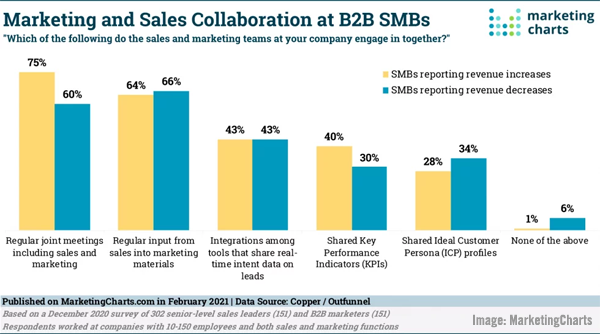
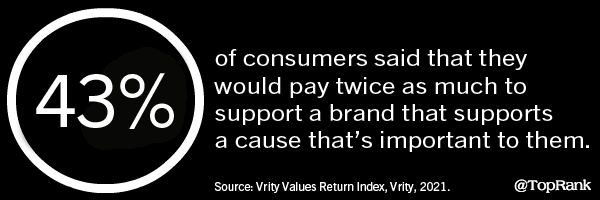
2021 March 5 MarketingCharts Chart New Channels, Better Targeting: How B2B Tech Marketing Is Changing [Survey] 54 percent of global B2B marketers plan to use more marketing channels during 2021, and 51 percent say they are seeking out new ways to tell their brand's stories — two of several statistics of interest to digital marketers in newly-released report data from Spotify and WARC. MarketingProfs New Report Looks at the Rising Influence of Online Communities 77 percent of consumers say that online groups are the single most important communities in their lives, a trend that has increased during the pandemic, according to recently-released global survey data. Social Media Today Twitter announces paid Super Follows to let you charge for tweets Twitter has announced a selection of payment tools that will allow online publishers to provide exclusive content on the social platform, while a new Twitter Communities feature will bring topic-specific groups to the platform. The Verge Facebook Shares New Research into the Comparative Performance of Brand vs Direct Response Campaigns Facebook has published results from three-year examination of 500 brand and direct response (DR) marketing campaigns, detailing how effectiveness varies across industries and target audiences, the social media giant recently announced. Social Media Today 62% of People Say Customer Photos Influence Purchase Decisions Some 62 percent of consumers say they are more likely to make a purchase when they can first see customer photos and videos, according to recently-released survey data, also showing that other customer-created content also influences purchase decisions. Search Engine Journal Does ‘brand purpose’ messaging actually impact consumer behavior? 82 percent of consumers say that they would pay more to choose a brand that supports a cause that is important to them, and 43 percent say they would pay twice as much to support such brands, according to newly-released survey data of interest to digital marketers. Campaign US 2021 March 5 Statistics Image Brandwatch is acquired by Cision for $450M, creating a PR, marketing and social listening giant Communication and public relations giant Cision has acquired social media listening platform Brandwatch for $450 million, in a move that will also see BuzzSumo among Cision's properties, the firm recently announced. TechCrunch TikTok, Facebook Are America's Least-Trusted Platforms, 61% Want Tech Giants Regulated TikTok, Facebook, and Twitter were the least-trusted platforms among U.S. consumers, while Google, Amazon, Microsoft and Apple occupied the most-trusted spots, according to recently-released November 2020 survey data. MediaPost Google’s Message To The Ad Industry: We Won’t Build Our Own Third-Party Cookie Alternatives (And We Don’t Want You To Either) Search giant Google announced that it does not plan to implement alternative tracking methods once it ceases online tracking cookie support in its Chrome web browser, and voiced its disapproval of email-based tracking alternatives — moves that have caused advertising industry speculation about the future importance of first-party data among digital marketers. AdExchanger Fewer Than Half of B2B SMBs Report Shared KPIs for Marketing and Sales Ideal customer profiles (ICPs) are the least shared among sales and marketing teams, while regular joint meetings between the two departments are the most frequency activities shared, according to recently-released B2B marketing and sales collaboration survey data. MarketingCharts ON THE LIGHTER SIDE: 2021 March 5 Marketoonist Comic A lighthearted look at “sustainability marketing” by Marketoonist Tom Fishburne — Marketoonist Trader Joe's, Great Value 'Most Loved Brands' — MediaPost TOPRANK MARKETING & CLIENTS IN THE NEWS:
  • SAP — NBCUniversal, Ad Council, and SAP Execs on the Power of Purpose-Led Marketing — Adweek
Have you found your own key B2B marketing story from the past week of industry news? Please let us know in the comments below. Thank you for taking the time to join us for the TopRank Marketing B2B marketing news, and we hope that you'll return again next Friday for more of the week's most relevant B2B and digital marketing industry news. In the meantime, you can follow us at @toprank on Twitter for even more timely daily news.

The post B2B Marketing News: How B2B Tech Marketing Is Changing, The Rising Influence of Online Communities, B2B Sales & Marketing Sharing Study, & Brand vs Direct Response Campaign Report appeared first on B2B Marketing Blog - TopRank®.


Article Source: http://bathseoexpert.blogspot.com/2021/03/b2b-marketing-news-how-b2b-tech.html